

Perfect Tiki Cocktails for a Romantic Evening: History & Recipes
Tiki cocktails blend tropical flavors, rum, and those quirky, exotic ingredients that make you feel like you’ve escaped to some sunny island. They’re colorful, fun to make together, and—let’s be honest—just plain delicious. The right tiki cocktails can turn a regular date night into something a little more magical. Drinks like the Polynesian Passion and Jungle Bird bring sweet and tangy flavors that practically beg for soft lighting and good company.

The Jungle Bird is one of those iconic tiki drinks that’s stuck around since the 1970s, first mixed up at a Kuala Lumpur hotel bar. It’s got dark rum, Campari, pineapple, and lime—a mix that’s bold, a little bitter, and just sweet enough. Polynesian Passion, on the other hand, leans into passion fruit and lighter rums for a different vibe.
You don’t need a pro’s bar setup to make these at home. This article digs into which cocktails really set a romantic mood, shares some backstories, and throws in ideas for food pairings and easy presentation tricks to make your night feel extra special.
Signature Tiki Cocktails for Romance
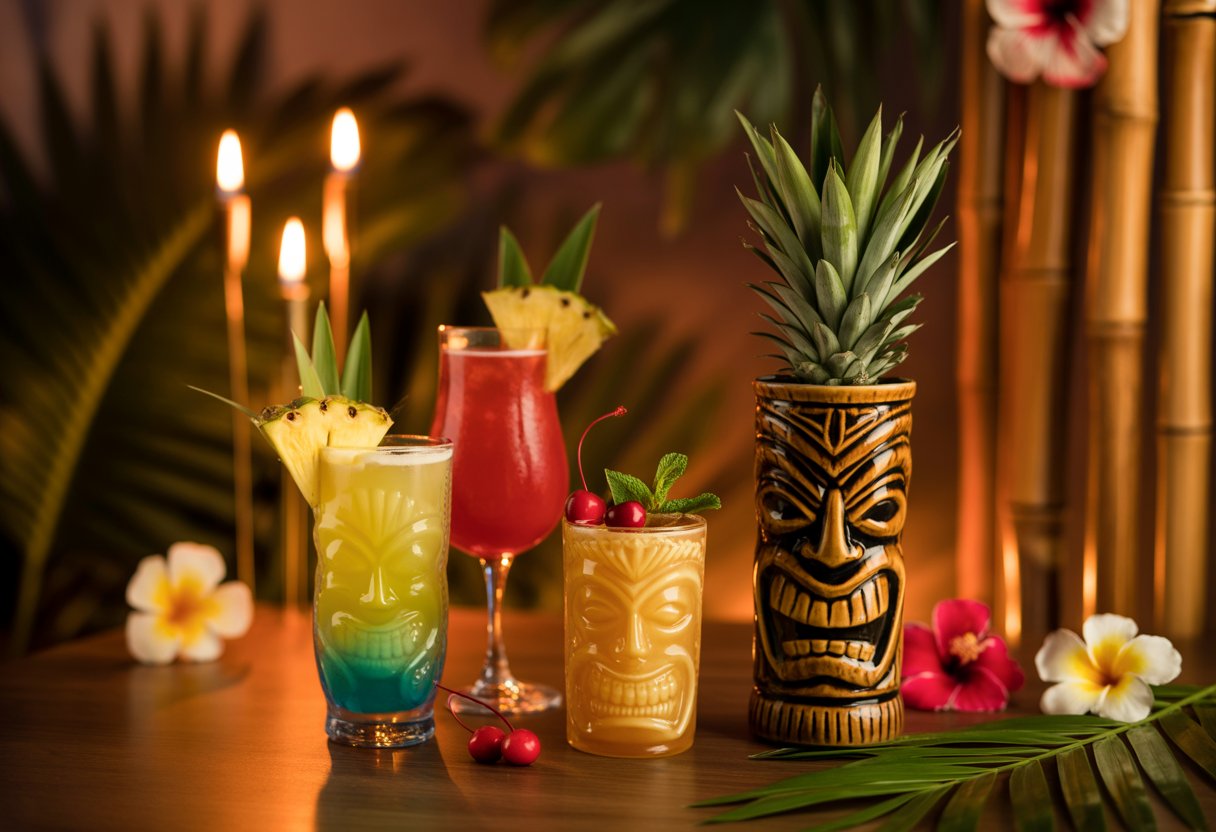
Tiki cocktails are all about tropical flavors and rum—no big surprise there. But when you throw in passion fruit, citrus, and spices, you get drinks that look gorgeous and taste layered and interesting. They just set the right mood for two.
Polynesian Passion: The Ultimate Romantic Tiki Drink
Polynesian Passion is a tropical drink inspired by island romance. Passion fruit takes the lead, with dark rum and sometimes a float of high-proof rum to finish it off.
It’s got a strong, sweet kick that makes you think of warm breezes and ocean waves. The tartness from passion fruit keeps things lively, and that 151-proof float? It’s not for the faint of heart, but it’s a fun touch.
People love serving this in carved tiki mugs or even hollowed-out pineapples. Top it off with tropical garnishes—orchids, pineapple leaves, maybe a little umbrella if you’re feeling playful. It’s a showstopper for date night.
Jungle Bird: Balancing Boldness and Sweetness
The Jungle Bird was born in Kuala Lumpur back in the 1970s, at the Hilton’s Aviary Bar. It’s a bit of a rebel in the tiki world, thanks to Campari—a bitter Italian liqueur you don’t usually see in these drinks.
Key ingredients include:
- Dark rum (1.5 oz)
- Campari (0.75 oz)
- Pineapple juice (1.5 oz)
- Fresh lime juice (0.5 oz)
- Simple syrup (0.5 oz)
This drink is all about balance. Campari’s bitterness slices through the pineapple’s sweetness, while dark rum keeps everything grounded. The result? A deep red cocktail with a foamy top, garnished with pineapple and a cherry. It’s a little more grown-up than the usual sweet tiki fare—great if you like something with a bit of edge.
Tropical Twists: Modern Variations for Couples
Bartenders are always tinkering with the classics. These days, you’ll see fresh herbs like basil or Thai basil for an aromatic twist, or even jalapeño and ginger for a little heat. It’s a cool way to keep things interesting.
Some bars serve giant tiki bowls for two, loaded with elaborate garnishes and multiple straws. Sharing one is half the fun—maybe even the best part. And the rum? It doesn’t have to be just one kind. Agricole rum adds grassy, earthy notes, while Jamaican rums can get pretty funky. There’s a lot to explore if you’re feeling adventurous.
The History of Iconic Tiki Cocktails
Tiki cocktails first showed up in the 1930s, when Americans wanted a little escape from tough times. Suddenly, rum drinks with tropical flavors and wild presentations were everywhere. They turned basic booze into something theatrical, and honestly, it’s no wonder they’re still around.
Origins of the Polynesian Passion
The Polynesian Passion isn’t one of the oldest tiki drinks, but it does follow in the footsteps of those mid-century tropical creations. It’s built around passion fruit and dark rum, sometimes with a 151-proof rum float for a little extra punch.
Its story echoes what early tiki bartenders did—mixing up exotic flavors for guests chasing a taste of the islands. Smuggler's Cove is a great read if you want to dive into how these drinks evolved and got reinvented over the years.
The drink caught on at spots trying to capture that dreamy, escapist vibe. With its juicy flavors and strong rum base, it’s a favorite for anyone after a little tropical fantasy in a glass.
Cultural Roots of the Jungle Bird
The Jungle Bird popped up in 1978 at the Kuala Lumpur Hilton—one of the rare tiki drinks not born in the U.S. Giuseppe Gonzalez, the bartender, whipped it up as a welcome drink for the Aviary Bar’s guests.
What sets it apart? That splash of Campari. You don’t see much of that in tropical drinks, so it gives the Jungle Bird a bittersweet edge you don’t find elsewhere.
Key ingredients include:
- Dark rum (usually blackstrap or aged)
- Campari
- Pineapple juice
- Fresh lime juice
- Simple syrup
The Jungle Bird got a second wind in the 2000s, when bartenders started digging up old tiki recipes and sharing them with a new crowd.
Tiki Cocktail Evolution Over Decades
Tiki cocktails got their start in the 1930s, thanks to Ernest Gantt—better known as Donn Beach. He opened Don’s Beachcomber in Hollywood and started mixing Caribbean rums with tropical juices and spices. Not long after, Victor Bergeron launched Trader Vic’s and created the Mai Tai in 1944.
The tiki craze really took off in the ’50s and ’60s. Bars across America were decked out with bamboo, torches, and ceramic mugs. It was escapism on a budget, and people couldn’t get enough. Drinks got fancier, with wild garnishes and sometimes even flames.
By the ’70s and ’80s, tastes changed—wine and simpler cocktails took over, and tiki faded for a while. But in the early 2000s, bartenders started reviving old recipes and techniques. Now, modern tiki bars mix tradition with a fresh take, focusing on quality and flavor but never losing that sense of fun.
Crafting the Perfect Tiki Experience at Home
If you want to make tiki drinks at home, it’s all about good spirits, a little technique, and putting care into how you serve them. You don’t need to go overboard, but knowing what matters makes a difference.
Choosing the Right Spirits and Fresh Ingredients
Stocking a home tiki bar is mostly about having a few types of rum—light, aged, and dark. Light rum is your base, aged rum adds depth, and dark rum brings those rich, molasses-y notes that just work with tropical flavors.
Some classic tiki drinks use brandy or Cognac for extra body and a hint of oak. But whatever you do, squeeze your own citrus. Bottled juice just doesn’t cut it if you want that fresh, bright flavor.
Essential Fresh Ingredients:
- Lime juice (squeeze it within a few hours)
- Lemon juice (fresh is a must)
- Orange juice (go fresh if you can)
- Pineapple juice (fresh or a really good canned one)
- Grapefruit juice
Orgeat syrup (almond) shows up in a bunch of tiki recipes. Passion fruit syrup and falernum add that extra tropical punch. You can buy these, but making them at home is actually doable and gives you more control over the flavor.
Essential Mixing Techniques for Tiki Drinks
Most tiki drinks need a good shake with ice—about six to eight seconds, or until the shaker’s icy cold. That’s how you get the right chill and dilution.
Some cocktails are blended with crushed ice for a slushy texture. Don’t overdo it, though, or you’ll water things down. Just blend until everything comes together.
Layering is a neat trick for both looks and taste. Pour a heavier spirit slowly over a spoon so it floats on top—easy drama, and it actually changes the way the drink tastes as you sip.
If you see “flash blending” in a recipe, that just means a quick pulse in the blender with crushed ice. It makes the drink lighter and a little frothy, without turning it into a full-on smoothie.
Garnishes and Glassware for Romantic Flair
The right vessel really lifts a tiki drink from just another cocktail to something that feels like a little vacation. Classic tiki mugs—think tikis, skulls, or even pineapples—set the mood right off the bat. If you're sharing, a big ceramic bowl makes the whole thing feel more playful and intimate.
Fresh garnishes can turn any drink into a piece of edible art. Pineapple wedges, orange wheels, and cherries give that classic look everyone expects. Toss in an orchid or even a gardenia if you're feeling extra romantic; the scent alone is worth it.
Romantic Garnish Ideas:
- Fresh mint sprigs for aroma
- Starfruit slices for elegance
- Paper umbrellas for whimsy
- Long straws for sharing
Bold garnishes? Absolutely. Flaming lime shells bring a bit of drama—just be careful with them. Sugarcane sticks do double duty as both a stirrer and a subtle sweetener.
Layering multiple garnishes gives a sense of abundance and a little luxury. Mixing citrus, herbs, and flowers shows you put in the effort, and honestly, it just feels special.
Pairing Tiki Cocktails With Romantic Cuisine
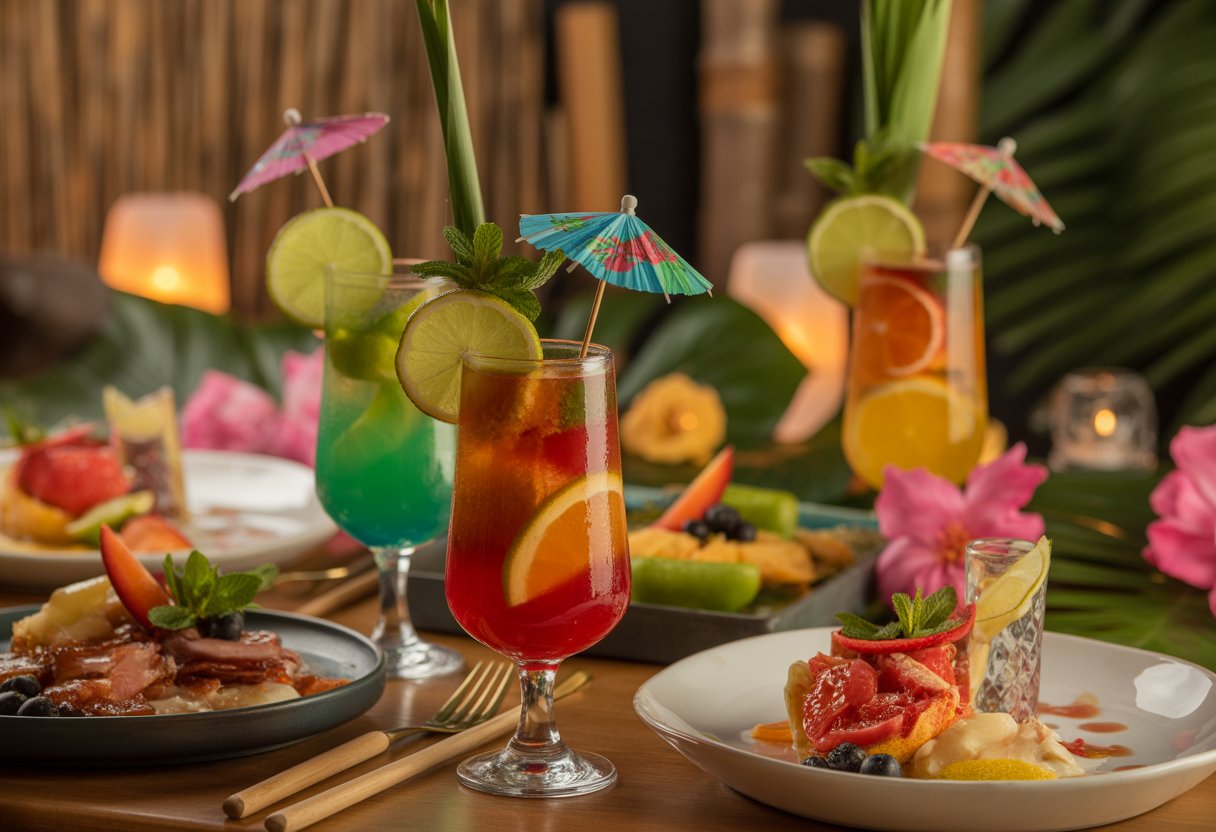
The tropical flavors in tiki cocktails play really well with both old-school island dishes and modern fusion plates. Pairing the right food with drinks like Polynesian Passion or Jungle Bird just brings everything together.
Food Pairings for Polynesian Passion
Polynesian Passion is all about rum, passion fruit, and citrus—so foods with a touch of sweetness and acidity are a natural fit. Grilled seafood is a standout with this one.
Ideal pairings include:
- Coconut shrimp - That sweet coconut crunch matches the drink’s vibe
- Teriyaki-glazed salmon - The glaze’s sweetness evens out the cocktail’s tartness
- Mango chicken skewers - Fresh fruit flavors echo the passion fruit notes
- Pineapple fried rice - Light, aromatic, and full of matching fruit elements
Asian-inspired appetizers are a great match—think spring rolls with sweet chili sauce or Thai basil chicken for a savory contrast. The citrus in the cocktail cuts through richer dishes like pork belly bao buns.
Vegetarian? Grilled pineapple with chili-lime seasoning or a coconut curry loaded with veggies fits right in with these flavors.
Complementary Flavors: Jungle Bird and Savory Bites
The Jungle Bird mixes dark rum, Campari, pineapple juice, and lime for a bittersweet kick that begs for bold, savory food. Campari’s bite needs something that won’t get lost next to it.
Best food matches:
- Jerk chicken - Spicy heat meets the cocktail’s bitter-sweet balance
- Blackened fish tacos - Charred flavors play up the Campari’s complexity
- Glazed pork ribs - Sweet and savory notes bring out the best in both
- Char siu pork - Those caramelized edges? Perfect with the drink’s depth
Pineapple juice in the Jungle Bird can handle heat, so dishes with ginger, garlic, or chili peppers are fair game. Tiki culture draws heavily from Polynesian and Asian influences, so these cuisines just make sense here.
Rich, fatty foods—duck confit, maybe braised short ribs—balance out the cocktail’s bitterness, while the citrus slices through the richness nicely.
Setting the Mood: Ambiance and Presentation
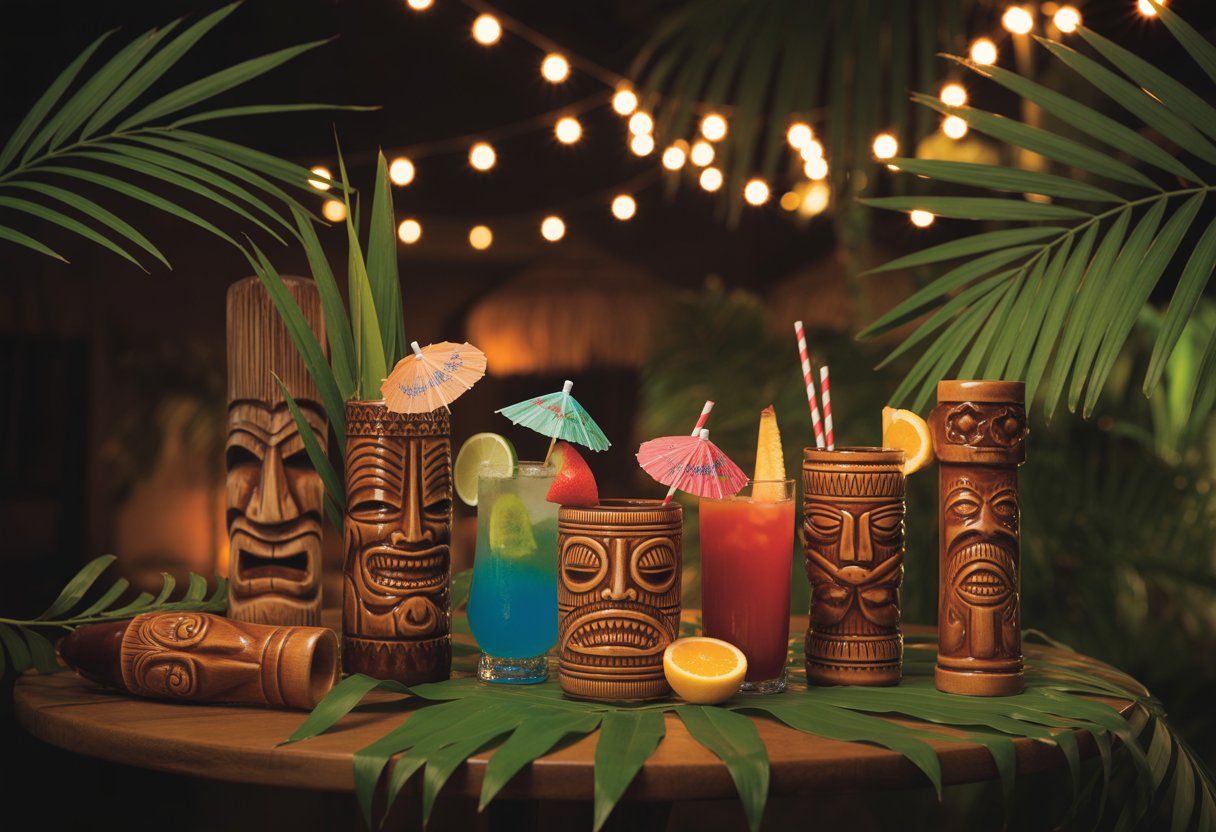
The right atmosphere can turn tiki cocktails into a real romantic experience. Lighting, decor, and presentation all work together to transport you—at least for the night—to an island for two.
Creating a Tropical Atmosphere for Two
Soft amber lighting is the secret to a cozy tiki evening. String lights or flameless candles give you that warm, flickering glow without being too harsh. Honestly, just dim the overheads and let everything feel golden and relaxed.
Fresh tropical flowers—orchids, hibiscus, plumeria—bring a whiff of the islands and a pop of color. Keep arrangements low so you can actually see each other, or float a few blooms in a shallow bowl for a subtle touch.
Music sets the mood, too. Gentle ukulele, classic exotica jazz, or even some modern Hawaiian tracks keep things tropical but never drown out conversation. Keep the volume just low enough that you don’t have to lean in and shout.
Natural textures finish the scene. Bamboo placemats, woven coasters, and wooden boards add warmth. A palm frond or a single monstera leaf near the drinks looks lush without taking over the table.
Presentation Tips for a Romantic Evening
Glassware choice really shapes the romantic cocktail experience. Classic tiki mugs bring a bit of playful drama, while hurricane or coupe glasses feel more refined and a little mysterious. Chilled glasses help keep drinks cool, especially when you’re lingering over candlelight.
Garnishes should look inviting but not get in the way—nobody wants to wrestle a pineapple wedge on a date. Fresh pineapple, citrus wheels, and mint are easy wins for color and scent. Edible flowers like pansies or nasturtiums? They’re romantic, but not in a cheesy, plastic-umbrella way.
Essential Garnish Elements:
- Fresh fruit cut into shapes that look good but aren’t fussy
- Herb sprigs for a little aromatic lift
- Cocktail picks with a couple of tropical fruit pieces
- Rim treatments—think sugar or toasted coconut, not too much
Try serving drinks on small trays, with napkins that fit the vibe, and maybe some snacks on the side. It’s a small touch, but it shows you care—plus, it keeps everything from getting messy as the evening goes on.
Happy Valentines Day!
Mohalo,
Dave