

Inspiration for Reimagining Your Tiki Cocktail Setup
Creative Ways to Revamp Your Tiki Bar Space
Your tiki bar has the potential to become more than just a place to mix drinks—it can be a complete tropical escape right in your own space. Whether you're working with a backyard corner, a basement setup, or a dedicated home bar area, the right combination of decor, lighting, and thoughtful details can transform an ordinary space into an island-inspired retreat. From selecting the right furniture and color palette to adding greenery and atmospheric lighting, a well-designed tiki bar creates an inviting environment where friends and family naturally want to gather.
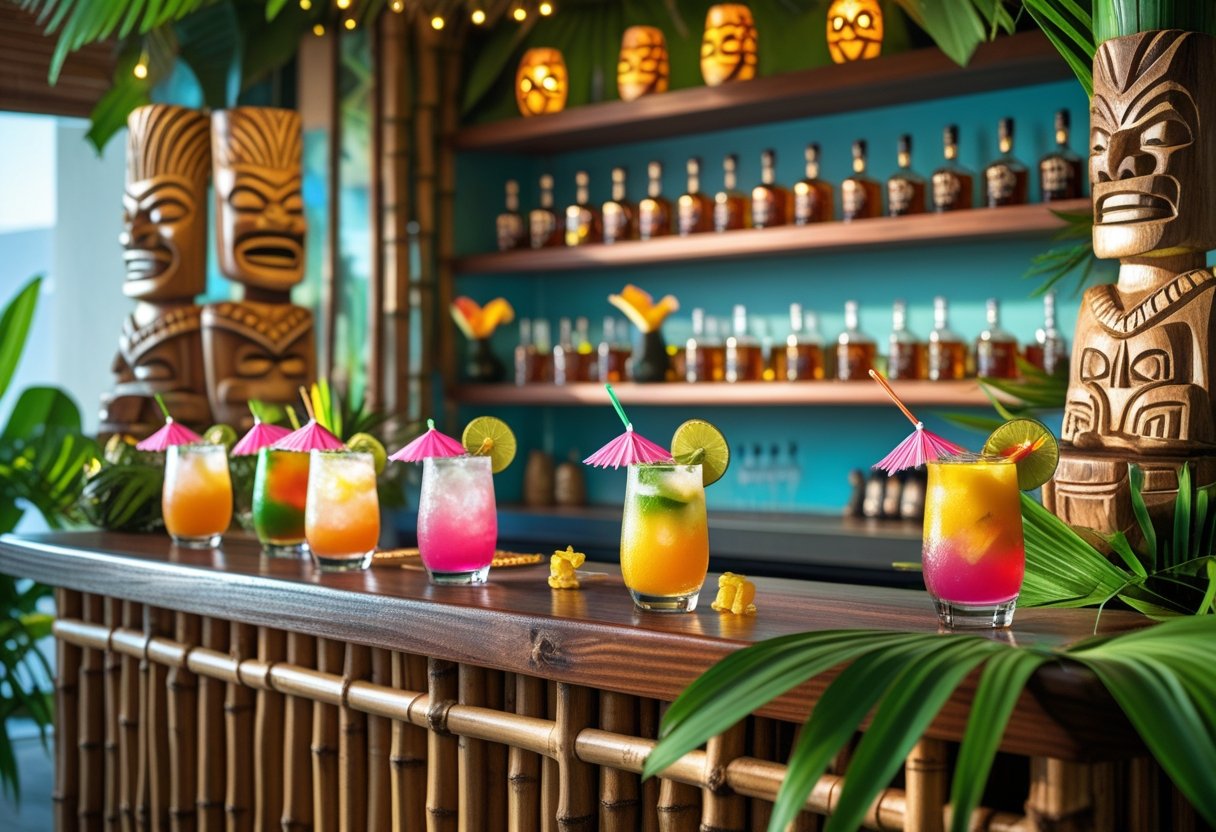
The key to a successful tiki bar makeover lies in balancing authentic tropical elements with practical functionality. Creating a colorful cocktail station with bamboo panels and vibrant drinks brings that vacation feel home, while strategic lighting and decor set the mood for memorable evenings. Small updates like new glassware or wall art can refresh an existing setup, while larger changes like adding thatched accents or building a proper bar structure can completely reimagine the space.
Foundations of an Inviting Tiki Bar
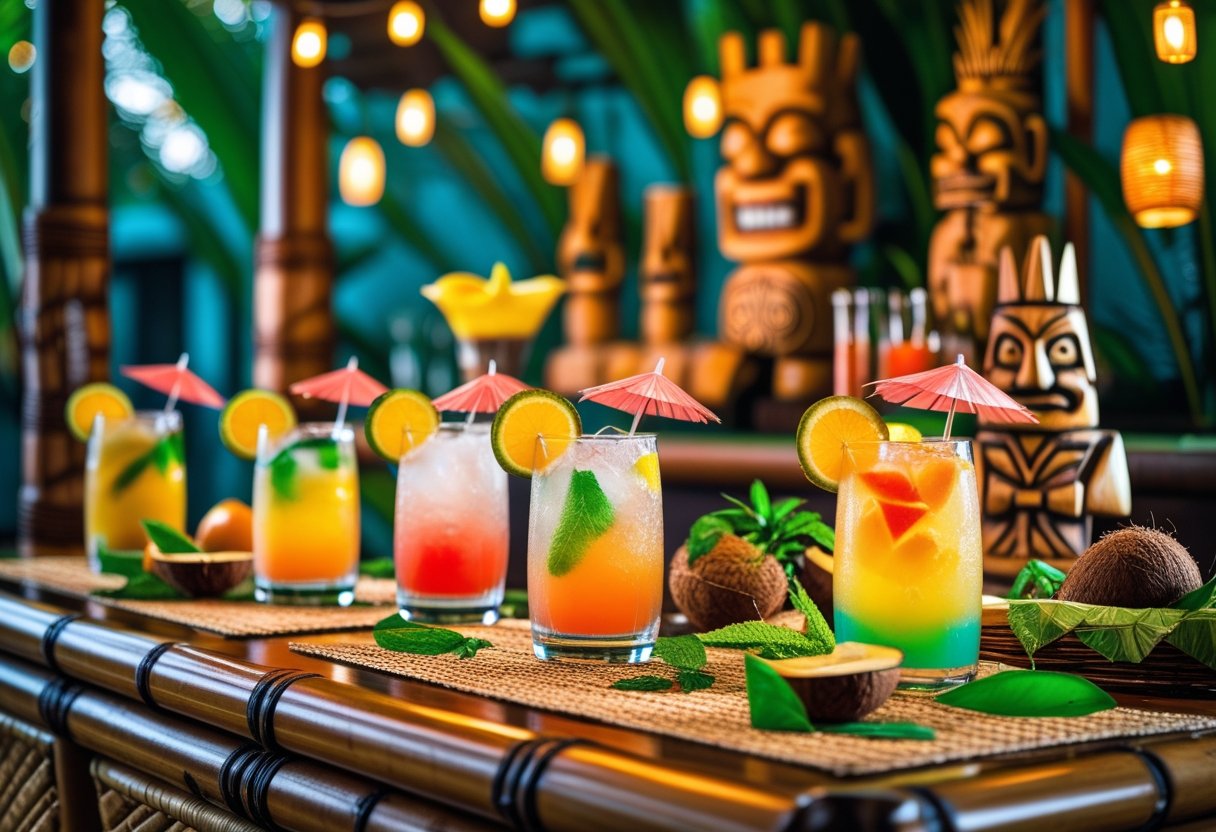
The right location and thoughtful layout create the base for a successful tiki bar, while balancing indoor and outdoor elements ensures year-round enjoyment and proper attention to comfort makes guests want to stay longer.
Selecting the Ideal Location and Layout
The location determines how well a tiki bar functions for entertaining. A backyard tiki bar works best in a spot that offers some natural shade during peak sun hours while still providing good visibility from the main house. Corner locations maximize space efficiency and create a natural gathering point.
The bar counter should face the main seating area so the bartender can interact with guests. A 6 to 8-foot bar counter provides enough room for drink preparation and serving multiple people at once. Position the bar with at least 3 feet of clearance behind it for comfortable movement.
Traffic flow matters for functionality. Guests need clear paths to reach the bar, seating areas, and any bathroom facilities without crowding the bartender's workspace. A U-shaped or L-shaped layout often works better than a straight bar because it creates natural conversation zones.
Balancing Indoor and Outdoor Options
Outdoor tiki bar ideas offer authentic tropical ambiance with natural breezes and starlit evenings. These setups need weatherproof materials like treated bamboo, sealed wood, or synthetic thatch roofing. Rain covers or retractable awnings extend usability during wet weather.
Indoor tiki bars provide climate control and protection from insects. They work year-round regardless of weather conditions. The tradeoff is reduced natural light and less connection to outdoor spaces. Many homeowners solve this by adding large windows or French doors that open to patios.
Key considerations for each option:
- Outdoor: Requires electrical planning for lighting, potential plumbing for running water, pest control measures
- Indoor: Needs proper ventilation for mixing drinks, adequate lighting design, flooring that handles spills
A hybrid approach combines both worlds by creating a tropical retreat with partial walls or sliding glass panels.
Planning for Comfort and Functionality
Seating height matters for guest comfort. Bar stools should measure 28 to 30 inches for standard bar counters or 24 to 26 inches for lower counter heights. Include a mix of bar seating and lounge chairs to accommodate different preferences.
Proper lighting creates ambiance without leaving guests stumbling in the dark. Layer different light sources including string lights at 8 to 10 feet high, tiki torches around the perimeter, and task lighting over the bar prep area. Dimmers allow adjustment based on the time of day.
Storage keeps the bar functional. Include space for glassware, mixing tools, liquor bottles, and garnishes within arm's reach of the bartending area. A small refrigerator holds ice, mixers, and fresh ingredients. Closed cabinets protect items from weather and pests in outdoor setups.
Design Themes and Core Decor Elements
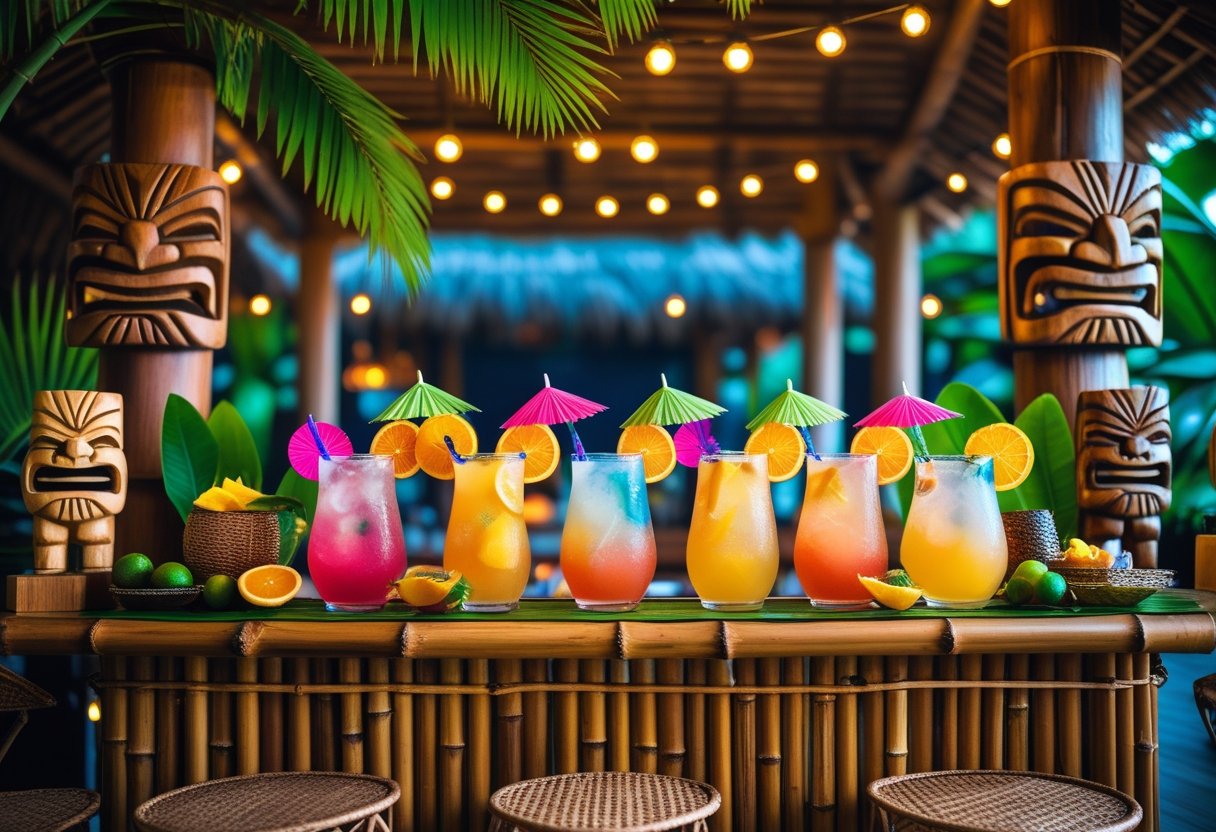
Creating an authentic tiki bar space requires careful attention to traditional materials and design elements that capture the spirit of Polynesian culture. The foundation of any successful tiki setup relies on natural materials, bold tropical accents, and personalized touches that transform an ordinary space into an island escape.
Embracing Tiki Culture and Tropical Vibes
Tiki culture centers on recreating the relaxed atmosphere of tropical islands through vibrant colors and natural elements. Bold greens, sunny yellows, deep ocean blues, and vibrant pinks form the color palette that defines authentic tiki spaces. These colors can appear on accent walls, in decorative items, or through carefully selected drinkware.
Tropical plants play a vital role in establishing the right atmosphere. Palm trees, hibiscus flowers, and monstera leaves bring lush greenery indoors and create visual depth. Real plants work well for those comfortable with maintenance, while high-quality artificial options provide the same aesthetic without upkeep demands.
Tiki bar decorating ideas often include exotic wall art featuring tropical landscapes, tiki masks, or vintage Polynesian imagery. These pieces serve as focal points and conversation starters. Mixing different art styles creates visual interest while maintaining the island theme throughout the space.
Choosing Bamboo Furniture and Materials
Bamboo furniture serves as a cornerstone of tiki bar design, offering both durability and authentic tropical appeal. Bar carts made from bamboo provide mobile drink service while reinforcing the natural aesthetic. These pieces typically feature wine racks and glass holders that combine function with style.
Bamboo chairs work particularly well in tiki settings because of their lightweight construction and foldable designs. They accommodate guests easily during gatherings and pair beautifully with bright cushions in tropical prints. The natural texture of bamboo adds warmth to the space without overwhelming other design elements.
Key bamboo elements include:
- Bar carts with natural wood finishes
- Seating with woven or slatted designs
- Accent tables and shelving units
- Decorative panels for walls or dividers
Sustainable bamboo options provide eco-friendly choices while maintaining the authentic look. Mixing different bamboo pieces creates a layered appearance that feels collected rather than matching.
Incorporating Thatched Roofs and Panels
Thatched roof accents deliver immediate visual impact and establish an authentic island atmosphere. These materials can cover bar areas, create cozy nooks, or serve as overhead accents. Faux thatched options provide the tropical look without the maintenance requirements of natural materials.
Bamboo panels complement thatched elements by adding texture variation to walls and dividers. These panels work well for creating separation between bar areas and seating spaces while maintaining an open feel. They also provide excellent backing for displaying tiki masks or tropical artwork.
Installation requires secure mounting, especially for overhead applications. Outdoor setups benefit from thatched materials that provide both shade and ambiance during evening gatherings. Pairing thatch with artificial palm leaves enhances the tropical effect and softens hard edges in the space.
Adding Custom Signage and Unique Bar Features
Custom signage personalizes tiki bar spaces and sets the tone for guests. Handcrafted wooden signs featuring phrases like "Welcome to Paradise" work well above bar areas or near entryways. These pieces reflect individual style while maintaining the tropical theme.
LED neon signs offer modern alternatives with bright colors and playful designs. They provide visibility in dim lighting and add energy to the atmosphere. Chalkboards displaying drink recipes combine function with decoration and can be updated seasonally.
Effective signage options:
- Carved wooden pieces with tropical motifs
- Illuminated signs in tiki-inspired shapes
- Vintage-style metal signs with retro graphics
- Personalized directional signs pointing to "The Beach" or "Paradise"
Unique bar features include shadow boxes displaying items from tropical travels or first tiki bar visits. These personal touches create conversation pieces that guests cannot find elsewhere. Display cases for tiki mug collections or vintage finds add character while showcasing individual taste.
Ambiance: Lighting and Atmosphere Enhancements
The right lighting choices transform a basic bar setup into an immersive tropical retreat. Combined with sound elements, these features create a welcoming environment that extends enjoyment well into the evening hours.
String Lights and Lanterns for Evening Glow
String lights create the foundation for any well-designed tiki bar atmosphere. LED options provide energy efficiency while delivering consistent illumination throughout the night. Edison-style bulbs offer a warmer, vintage aesthetic that pairs well with bamboo and natural materials.
Placement matters significantly for maximum impact. Draping lights along the bar perimeter, overhead beams, or nearby posts creates depth and visual interest. Multiple strands at varying heights add dimension to the space.
Popular string light options include:
- Garden LED lights for energy-efficient operation
- Edison-style bulbs for vintage warmth
- Solar-powered fairy lights for eco-friendly illumination
Colorful lanterns complement string lights by adding pops of vibrant color. Paper lanterns in tropical hues like coral, turquoise, and yellow reinforce the island theme. Hanging them at different levels creates visual layers that draw the eye upward and make the space feel larger.
Tiki Torches and Fire Pit Features
Tiki torches provide both practical lighting and authentic island ambiance. These classic fixtures create flickering light that enhances the tropical mood while offering natural insect deterrent properties. Placing them around the bar perimeter defines the space and creates clear boundaries.
A fire pit becomes a natural gathering focal point that adds warmth and atmosphere. Gas fire pits offer convenient operation without ash or smoke concerns. The flames create a mesmerizing centerpiece that encourages guests to linger and socialize.
Fire features work best when positioned safely away from the main bar structure. A distance of 6-10 feet allows people to enjoy the warmth without overwhelming heat. Surrounding the fire pit with weather-resistant seating creates an inviting conversation area.
Layering with Colorful Lanterns and Outdoor Speakers
Colorful lanterns add visual punch during daylight hours and glow beautifully after sunset. LED versions eliminate fire hazards while providing reliable illumination. Mixing sizes and colors creates a festive atmosphere that feels authentically tropical.
Outdoor speakers complete the sensory experience by delivering island-themed music throughout the space. Bluetooth-enabled models offer easy connectivity without visible wiring. Positioning speakers strategically ensures even sound distribution without overwhelming conversation.
Recommended speaker placement:
- Mount at bar corners for even coverage
- Position at ear level when seated
- Keep away from water features
Reggae, steel drum melodies, and surf rock create an authentic tropical vibe. Adjustable volume controls let hosts match the music level to the occasion, whether it's a quiet evening or lively gathering.
Tropical Oasis: Greenery and Decorative Accents
Plants, masks, and island-themed decorations work together to transform any space into a convincing tropical paradise. The right combination of live greenery, carved artwork, and colorful accents creates an atmosphere that makes guests feel transported to a faraway island.
Tropical Plants and Botanical Displays
Tropical plants are the foundation of any authentic tiki bar environment. Palm varieties like areca palms, parlor palms, and bamboo palms thrive indoors and outdoors while providing that essential jungle canopy feel. Hibiscus plants add pops of color with their vibrant blooms in red, pink, orange, and yellow.
Bird of paradise plants deliver dramatic foliage and exotic flowers that perfectly capture the island aesthetic. Monstera deliciosa, with its distinctive split leaves, creates visual interest and fills empty corners effectively. Ferns like Boston ferns and staghorn ferns add lush texture when hung in baskets or mounted on walls.
Plant placement matters as much as selection. Group plants at different heights to create depth and layer them around the bar area, seating zones, and entryways. Mix large floor plants with smaller tabletop varieties and hanging plants to maximize the tropical effect without overcrowding the space.
Tiki Masks and Artistic Touches
Tiki masks and carved wooden pieces bring Polynesian culture and personality to the bar area. Traditional masks representing Hawaiian gods like Ku, Kane, Lono, and Kanaloa add authentic cultural elements. Wall-mounted masks work well above the bar counter or flanking doorways.
Carved wooden tikis in various sizes create focal points throughout the space. Tall tiki totems make impressive statements near entrances, while smaller carvings work on shelves and bar tops. Surfboards decorated with island motifs serve as unique wall art that reinforces the beach atmosphere.
Wooden signs with hand-painted tropical designs guide guests and add character. Parrot carvings, sea turtle sculptures, and pineapple decorations round out the artistic touches. These pieces should be spread throughout the space rather than clustered in one area.
Tropical Decorations for an Island Paradise
Colorful lanterns and string lights create ambiance while adding visual warmth. Paper lanterns in bright yellows, oranges, and reds hang above seating areas. Tiki torches placed around the perimeter establish boundaries and provide flickering light at dusk.
Bamboo accents tie the space together through bar facades, railings, and decorative poles. Natural materials like woven rattan placemats, coconut shell bowls, and seashell collections scattered on surfaces reinforce the island theme. Fabric elements such as tropical print tablecloths, cushions with palm fronds or hibiscus patterns, and grass skirts wrapped around bar bases add softness.
Fishing nets draped across walls or ceilings create texture when decorated with starfish and glass floats. Drink umbrellas, fruit skewers, and decorative straws in bright colors complete the tropical decorations that make the space feel like a true island paradise.
Enhancing the Experience: Cocktail Setup and Entertaining
A successful tiki bar setup combines the right drinks, proper glassware, and smart organization to create an authentic tropical experience. The bar should balance visual appeal with practical serving needs while showcasing themed accessories that transport guests to an island paradise.
Essential Tropical Cocktails and Drinkware
Classic tiki cocktails form the foundation of any tropical bar. Mai tais remain the most popular choice, featuring rum, orange liqueur, lime juice, and orgeat syrup. Piña coladas offer a creamy alternative with rum, coconut cream, and pineapple juice. Zombies pack a punch with multiple rum varieties and fruit juices.
The right glassware enhances each drink's presentation. Hurricane glasses work well for frozen drinks and layered cocktails. Tiki mugs shaped like tikis, skulls, or pineapples add authentic island flair. Highball glasses suit simpler rum-based drinks.
Bar hosts should stock rum varieties including light, dark, and spiced options. Fresh ingredients like lime juice, pineapple juice, and mint create better-tasting cocktails than pre-mixed versions. Simple syrups flavored with passion fruit or cinnamon add depth to tropical drinks.
Creative Use of Coconut Cups and Themed Accessories
Coconut cups provide an authentic serving option for tropical cocktails. Real coconut shells work for mai tais and rum punches, while reusable plastic coconut cups offer durability for outdoor entertaining. Both options create an instant island atmosphere.
Themed accessories complete the tropical setup. Colorful paper umbrellas, pineapple stirrers, and tropical fruit garnishes like orange wheels and maraschino cherries add visual interest. Bamboo straws replace standard plastic ones while maintaining the theme.
Decorative touches around the bar enhance the overall experience. Tiki torches provide ambient lighting during evening gatherings. String lights with tropical designs create a festive mood. Fresh flowers like hibiscus or orchids in small vases bring natural beauty to the bar area.
Optimizing the Bar Area for Serving and Storage
A well-organized bar makes serving drinks faster and more enjoyable. Built-in coolers keep beer and mixers cold without trips to the kitchen. Under-counter storage holds bottles, glasses, and bar tools within easy reach.
The bar counter should provide enough workspace for mixing multiple drinks at once. A minimum of three feet of counter space allows room for a cocktail shaker, cutting board, and ingredient bottles. Adding shelves behind the bar displays bottles and creates visual interest.
Storage solutions keep the bar functional. Bamboo or wicker baskets organize garnishes, napkins, and straws. Hooks underneath the counter hang bottle openers and bar towels. A small sink near the outdoor kitchen area makes cleanup easier without leaving guests unattended.
Personal Touches and Lasting Impressions
Making a tiki bar truly memorable means adding items that reflect personal stories and keeping the space balanced with a clear tropical theme. The right mix of meaningful displays and smart design choices turns a basic bar into a destination that guests want to visit again.
Custom Displays and Personal Memorabilia
A personal journey timeline helps tell the story of how someone discovered tiki culture. Shadow boxes can hold photos from tropical vacations, tickets from favorite tiki bars, or souvenirs from island travels.
Travel maps work well as focal points. Adding pins or small notes marking visited locations creates conversation starters. Some bar owners display bottles from special occasions with labels noting the date and event.
Vintage navigation tools like compasses or nautical charts add character while connecting to maritime history. These items look best when grouped together rather than scattered randomly around the space.
Popular personal display options:
- Framed postcards from tropical destinations
- Collections of tiki mugs from different bars
- Photos in weathered frames
- Handwritten cocktail recipe cards
Tips for Maintaining a Cohesive Tropical Escape
Sticking to a consistent color palette prevents the space from feeling cluttered. Most successful tiki bars use natural browns and greens with pops of bright coral or turquoise.
Bamboo accents and thatched elements help tie different areas together. Using these materials on the bar front, shelving, and overhead structures creates visual flow.
Lighting makes or breaks the mood. String lights and LED strips behind frosted panels create warm ambiance without harsh overhead brightness.
Plants add life but need regular care. Artificial tropical foliage mixed with a few real plants keeps maintenance manageable. Palm leaves and hibiscus flowers reinforce the island vibe without requiring constant watering.