

DIY Tips for Turning a Corner of Your Living Room Into a Jungle Oasis
Turning an empty corner of a living room into a green retreat doesn't call for fancy landscaping skills or a big budget. With a few well-chosen plants, some DIY containers, and a bit of creative arranging, just about anyone can turn an unused nook into a lush indoor jungle that actually feels good to be around. It all comes down to figuring out which plants work indoors, how to show them off at different heights, and keeping up with some basic care.
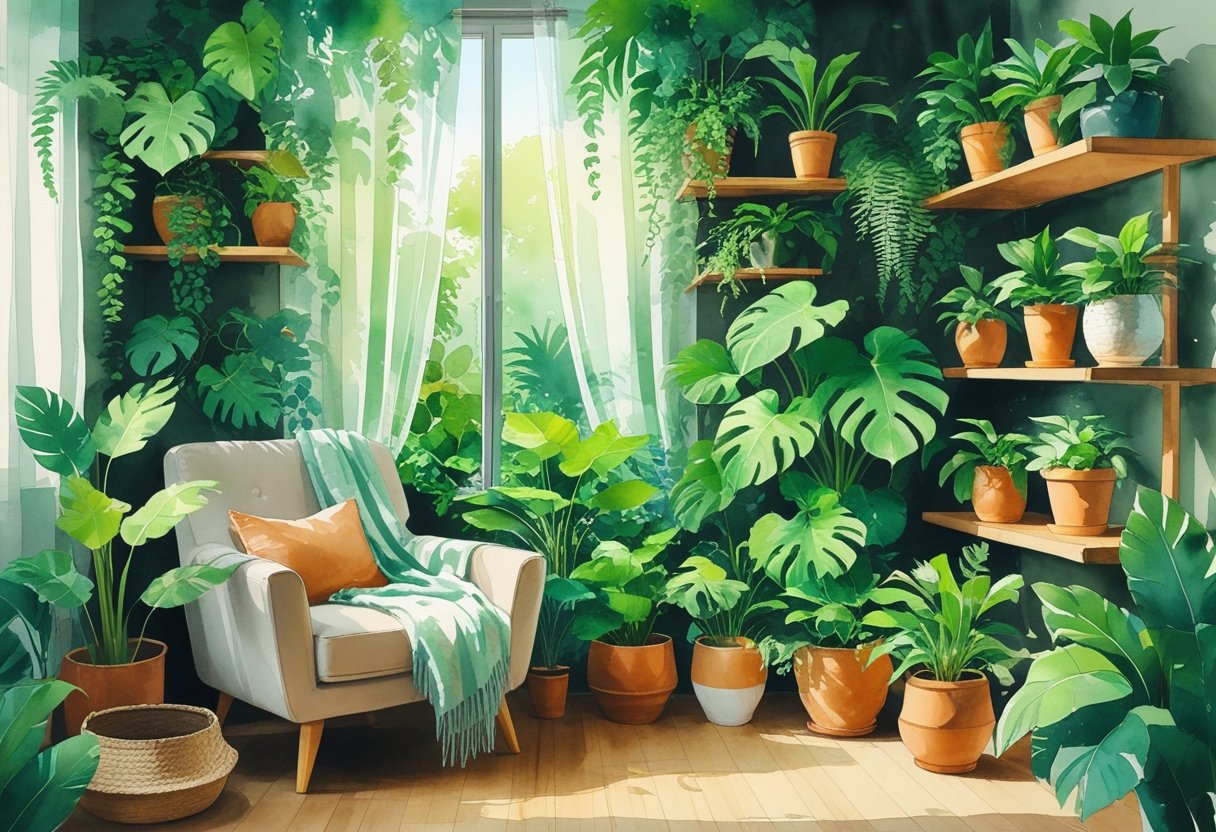
A mini indoor jungle brings a bit of nature’s calm right into your home and makes use of space that’s usually forgotten. Corners are perfect for vertical displays—think climbing vines, shelves, and hanging planters—so you can pack in greenery without taking over your whole living room. Even if you’re in a tiny apartment, you can pull this off with some space-saving tricks.
It’s all about a few practical steps: check out the light, pick plants that’ll actually thrive, maybe make a few custom planters, and set up a simple watering routine. Once you get things going, your indoor jungle can be surprisingly low-maintenance.
Choosing the Ideal Corner for Your Jungle Oasis
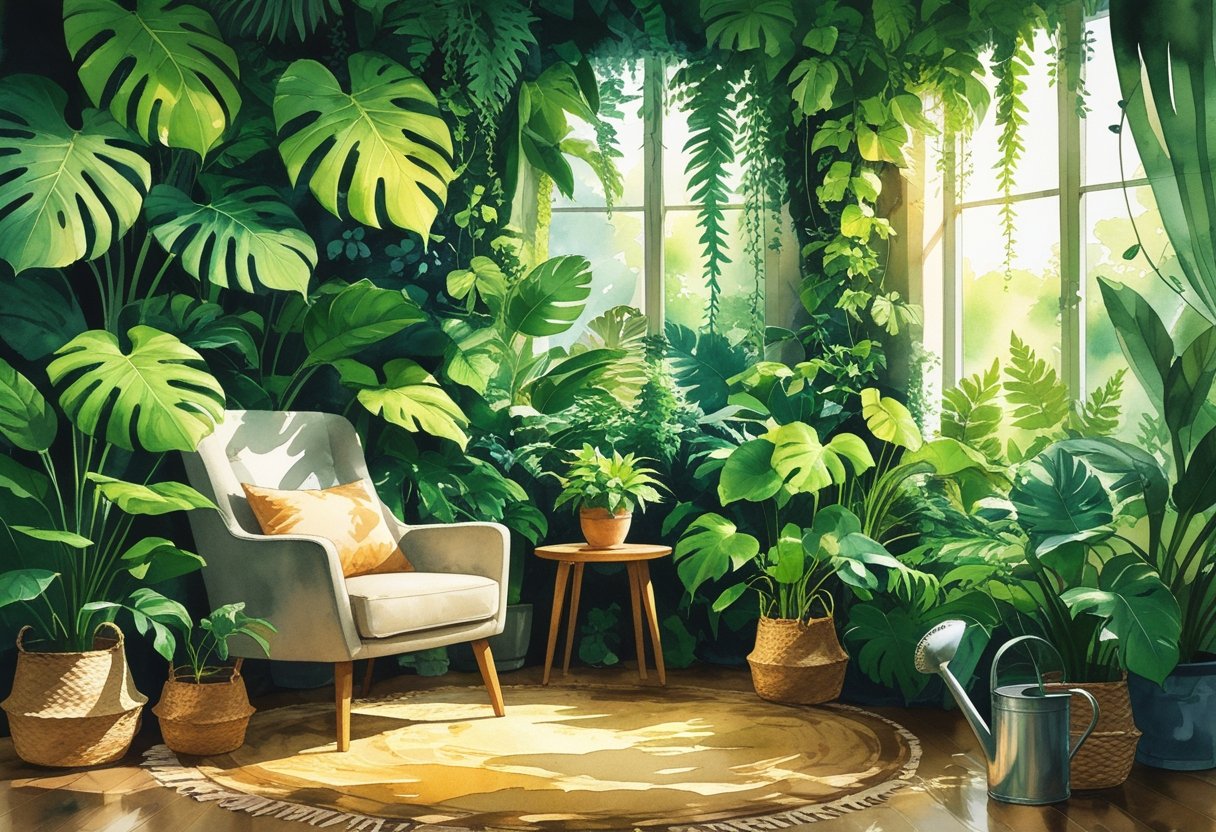
The right spot really does make or break an indoor jungle. Light, space, and humidity all play a part in whether your corner will turn lush or just limp along.
Assessing Natural Light and Climate
Most tropical plants want bright, indirect light. Corners by east or west windows usually get soft sunlight for a few hours—just right. North-facing windows are fine for low-light types like pothos and snake plants. Got a south window? That’s better for sun-lovers like succulents or cacti.
If you’re not sure how the light plays out, just watch the spot for a day or two. Direct sun can fry leaves, so you might want to hang a sheer curtain. And don’t forget about temperature—corners by vents or drafty doors can stress plants out. Aim for a steady 65-75°F if you can swing it. A room with stable temps opens up more plant options, honestly.
Optimizing Space and Layout
Starting an indoor jungle with houseplants is totally doable in small spaces if you think vertical. Wall shelves, plant stands of different heights, and hanging pots let you stack plants up instead of spreading them out all over the floor.
Even a 3x3 foot corner can hold 15-20 plants if you go up instead of out. Tall plants—like a fiddle leaf fig—go in the back, medium ones on shelves, and trailing types like philodendron can spill from the top. Just make sure you can reach everything for watering. Leaving a foot or so in front helps. And grouping plants that like the same care makes life easier.
Creating a Humid Microclimate
Tropical plants are happiest with humidity between 50-70%. Most homes fall short, especially in winter. Luckily, a corner setup helps trap a bit more moisture.
Cluster your plants together and they’ll boost the local humidity as they breathe. Pebble trays with water under pots add a little extra, but keep the pot bottoms above the water line to avoid soggy roots.
If you want to get serious, a small humidifier in the corner does wonders for ferns and calatheas. Running it a few hours a day is usually enough. Misting is fine for a quick fix, but it’s not a long-term solution for humidity.
Selecting Houseplants for a Thriving Indoor Jungle
The plants you pick will decide if your corner turns into a sparse patch or a lush retreat. Try mixing big statement plants with smaller ones, and use both upright and trailing types to fill every layer.
Best Statement Plants for Visual Impact
Big plants really set the vibe. The monstera deliciosa is a classic, with those cool split leaves that get huge if you give it time. It loves to climb, so a moss pole or trellis helps it go vertical.
Fiddle leaf figs have those big, violin-shaped leaves that everyone seems to love (though they can be a bit dramatic about light and water). Bird of paradise is another showstopper—its paddle-shaped leaves fan out and can get impressively tall. Both need water when the top inch of soil dries out, but don’t drown them.
Bamboo palm is great for adding height without hogging floor space, and it’s more forgiving about light than most big tropicals. Peace lily brings in some white blooms and glossy leaves, plus it lets you know when it’s thirsty by drooping.
Reliable Medium and Small Houseplants
Medium plants fill in the gaps. Snake plant stands tall and tough, barely cares if you forget to water. ZZ plant is another survivor—shiny leaves, low light, and not fussy at all.
Heartleaf philodendron or brasil varieties add a splash of color and don’t ask for much. Aglaonema comes in greens and pinks and adapts to whatever you throw at it. Spider plant is classic—those arching leaves and baby offshoots are hard to mess up.
These guys are good for people who travel or just forget sometimes. They don’t need constant attention, and you can group a few together to make the space look fuller.
Choosing Trailing, Climbing, and Vertical Varieties
Going vertical is key in tight spaces. Pothos vines are super easy—they’ll trail down or climb up, and there are several varieties to mix things up color-wise.
Climbing philodendron scandens can scale a trellis or wall. String of hearts and string of pearls look delicate dangling from hanging pots. Trailing plants soften up the look and fill empty air above furniture.
Try wall grids or tension rods for a vertical garden. Monstera and pothos both get extra ambitious in spring and summer if you give them something to climb.
Sourcing and Propagation Strategies
Local nurseries usually have healthier plants than big box stores. Take a peek at the leaves for any brown spots or signs of pests before you buy. Smaller plants are cheaper and seem to settle in better at home.
If you’re on a budget, propagation is your friend. Pothos, philodendron, and spider plant all root easily in water—just snip below a node, drop it in a jar, and wait a couple weeks. Once the roots are a couple inches long, move them to soil.
Plant swaps are a fun way to expand your collection. One pothos can give you a dozen new plants in a season. Spider plants even come with baby offshoots ready to pot up right away.
Layering, Arranging, and Displaying Your Plants
The way you arrange your plants can make a few pots look like a real jungle. Playing with different heights and using plant stands adds dimension and makes the space feel full, not cluttered.
Creating Visual Depth with Plant Heights
Grouping plants in odd numbers just looks more natural—three plants at different heights beats two or four every time.
Put your tallest plant in the back. Fiddle leaf fig or monstera are perfect for this and draw the eye up.
Medium plants go in the middle to bridge the gap. Pothos, philodendrons, and snake plants are great here.
Short plants fill the front. Think ferns, peperomias, or succulents—small details that don’t block the view.
Hanging planters add another layer above. Trailing plants like string of pearls or pothos in baskets create movement and draw the eye upward, making the space feel bigger.
Incorporating Plant Stands and Shelves
Plant stands let you show off smaller plants at eye level. Metal stands feel modern, wood is more boho or rustic—pick what fits your style.
Tiered stands are a real space saver. You can fit a bunch of small pots on one, stacking up instead of spreading out.
Wall shelves turn an empty wall into a vertical garden. Stagger them for interest and group plants with similar light needs together, since they’ll get the same exposure.
Corner shelves use awkward spaces well, stacking plants up while leaving the floor open for bigger pots.
Indoor plant displays look best when you mix up containers—ceramic, woven baskets, terracotta. The variety makes the whole setup feel collected, not cookie-cutter.
DIY Planters and Creative Container Solutions
The right containers can totally change the vibe of your jungle corner—and you don’t need to spend a fortune. Old mugs, baskets, or even kitchen bowls can work as planters, and mixing materials keeps things interesting.
Upcycling and Repurposing Everyday Items
Just about any container can become a planter with a little creativity. Old toolboxes, tin cans, wooden crates, even glass jars—they all work. The trick? Drill a few drainage holes in the bottom so roots don’t sit in water.
Repurposed toolboxes add character to a corner garden and offer plenty of space for herbs or small flowers. Metal tins? Great for succulents and cacti. Glass containers can turn into neat terrariums for ferns and moss that like a little extra humidity.
Don’t forget about your walls and ceiling. Hanging planters made with twine are super affordable and perfect for trailing plants like pothos or spider plants. A simple loop-and-knot holds pots at different heights—nothing fancy needed.
Common items to repurpose:
- Wooden pallets for wall-mounted planters
- Plastic bottles cut in half
- Old mugs and teacups for small plants
- Wicker baskets lined with plastic
Mixing Textures and Materials
Mixing planter materials adds depth and keeps things interesting. Smooth ceramic pots next to rough woven baskets? Yes, please. Shiny metal beside matte terracotta? Surprisingly good combo.
Varying the height of your planters matters too. Put big floor planters in the back, medium ones on stands, and hanging baskets up high. Suddenly, the whole corner feels lush and layered.
Try to stick with two or three main container colors to keep things from looking chaotic. Natural stuff like wood, wicker, and clay goes with just about anything. White or black containers can look modern, while brass or copper adds a cozy glow.
Essential Plant Care and Maintenance Routines
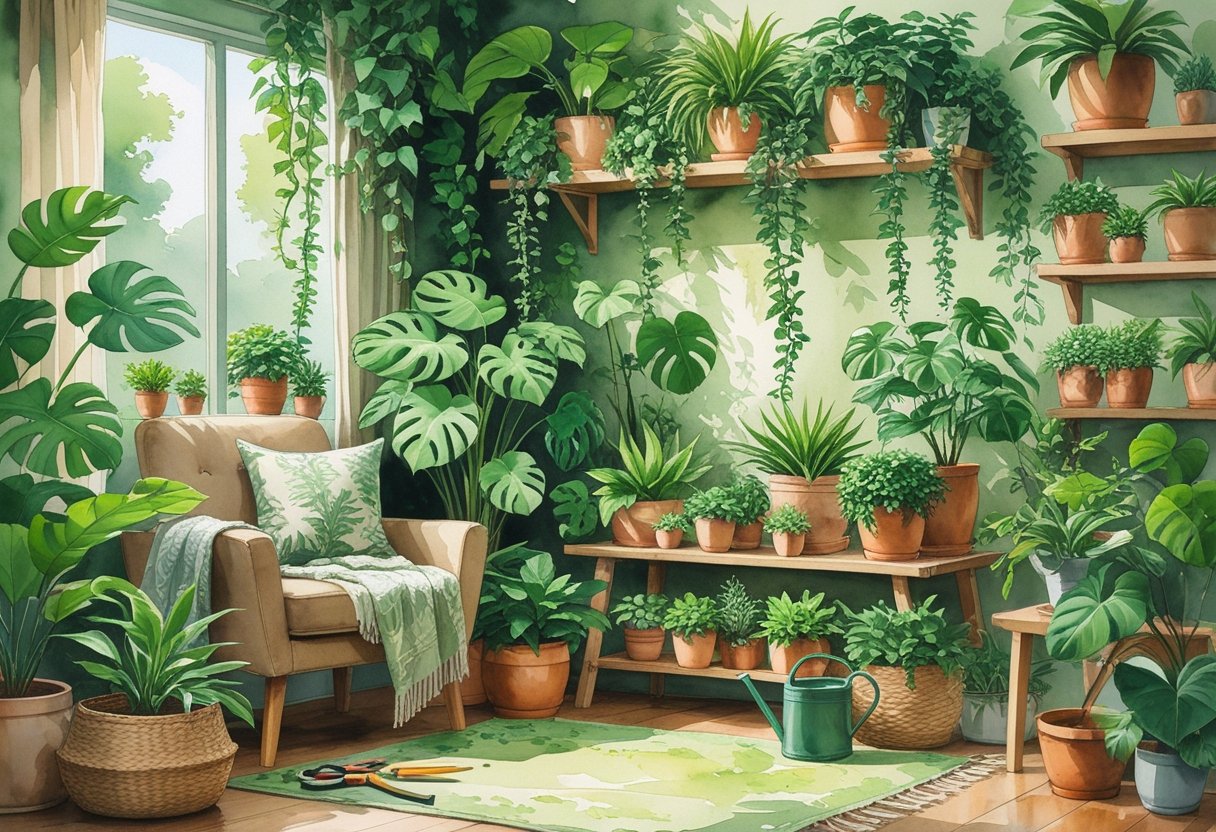
Healthy indoor gardens need regular care—watering, feeding, and a bit of grooming. Stick with the basics and most issues won’t even show up.
Watering Techniques and Common Pitfalls
Honestly, overwatering is the fastest way to kill a houseplant. Most corner plants only need water when the top inch of soil feels dry. Just poke your finger in the dirt before grabbing the watering can.
Room-temperature water is best. Cold water can shock the roots, and nobody wants that. Aim for the soil, not the leaves, to avoid fungal spots.
Proper drainage is non-negotiable. Every pot needs holes so water can escape. Saucers catch runoff, but don’t let water sit there—empty them out after half an hour.
Plants in shade or corners usually need less water than those in sunny spots. And in winter, plants slow down and barely need a drink. A simple finger test before watering helps you avoid soggy soil and root rot.
Fertilizing and Feeding Houseplants
Most indoor plants appreciate a little food during spring and summer. A balanced liquid fertilizer—diluted to half strength—every month or so is usually enough.
Different plants, different diets. Foliage types like nitrogen for leafy growth, while flowering kinds want more phosphorus for blooms.
Signs of nutrient deficiency include:
- Pale or yellowing leaves
- Stunted growth
- Weak stems
- Fewer new leaves
Too much fertilizer does more harm than too little. Salt buildup looks like a white crust on the soil or pot. Every few months, flush the pot with plain water to clear it out.
Plants stuck in low-light corners don’t need much fertilizer. Less light means slower growth, so don’t overdo it on the feeding.
Pruning, Cleaning, and Pest Prevention
Wiping leaves with a damp cloth helps plants breathe and look fresh. Big-leafed types like monstera or fiddle leaf figs really benefit. For smaller plants, sometimes a gentle shower does the trick.
Snip off dead or yellowing leaves—they just drain energy. Use sharp, clean scissors to avoid spreading disease. Trimming back leggy stems encourages bushier growth.
Common indoor pests include:
- Spider mites
- Fungus gnats
- Aphids
- Mealybugs
Give your plants a quick check every week. Look under leaves and along stems for bugs. Natural insecticidal soap or neem oil usually clears up most infestations.
Good airflow helps prevent pest and disease problems. If your plants are crammed together, spread them out a bit. Rotating them every couple weeks can also help keep things looking even and makes it easier to spot issues.
Adding Comfort, Decor, and Finishing Touches
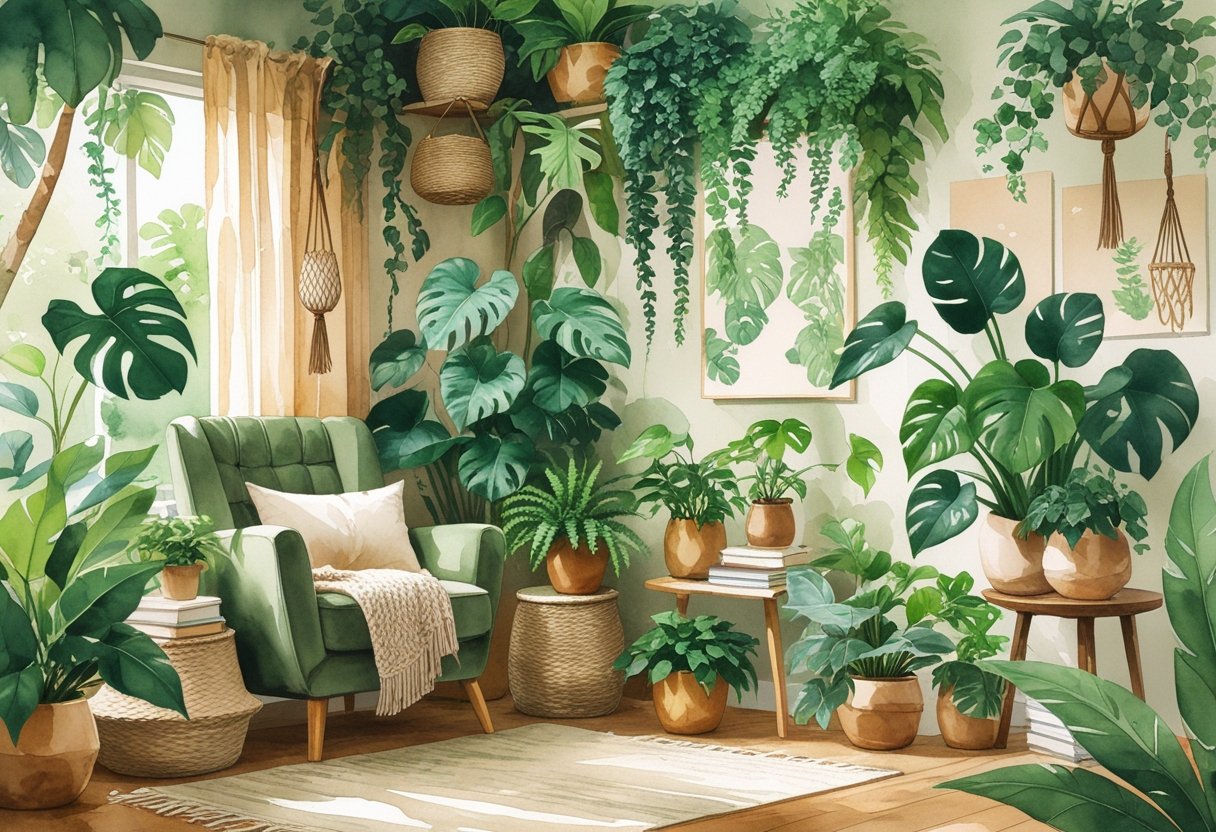
Natural materials and handmade touches make an indoor jungle feel cozy and real. The right furniture and a few personal decorations can set the whole tropical vibe in motion.
Integrating Natural Materials and Furniture
Wood, rattan, and bamboo furniture give a jungle room its backbone. A rattan chair or bamboo side table adds texture and keeps things feeling natural. These materials create warmth and authenticity—and honestly, who doesn’t love a bit of rattan?
Woven baskets do double duty as storage and decoration. They hold plant supplies, blankets, or magazines while making the space feel more tropical. A jute or sisal rug marks out your green corner and adds a soft touch underfoot.
Cushioned chairs make the spot inviting for long hangs. A plush armchair with green or earthy pillows is perfect for lounging with your plants. Maybe toss in an ottoman for your feet, or for an extra seat if guests drop by.
Natural wood shelves show off smaller plants at different heights. Reclaimed wood, with its worn look, adds a bit of charm. Just make sure the shelves are sturdy enough for those heavy planters loaded with trailing vines and ferns.
DIY Accessories for a Cohesive Jungle Theme
Macrame plant hangers are a clever way to add some vertical oomph without eating up precious floor space. Even basic knot patterns look great, especially if you're new to this. Hang your plants at a mix of heights—it's a simple trick that makes any room feel lush and layered, but still keeps your tables free for, well, life.
Hand-painting terra cotta pots? It's more fun than it sounds. Stick to earthy shades like cream, sage, or classic terracotta for that grounded, natural feel. A few geometric shapes or maybe a leafy doodle here and there can really pull the look together, even if your brush skills are more "enthusiastic" than expert.
Wall art is another easy win. Botanical prints, pressed leaves, or even snapshots from a trip somewhere tropical—anything goes. Mixing in a few vintage or antique accents can give the space a bit of soul, without making things look cluttered or fussy.
When the sun goes down, fairy lights or string lights wrapped around a beam or shelf add a soft glow that feels just right—almost like sunlight sneaking through leaves. If you need something brighter, a floor lamp with a woven shade does the job and keeps the jungle vibe intact. Not bad for a few small tweaks, right?
Mohalo!
Dave